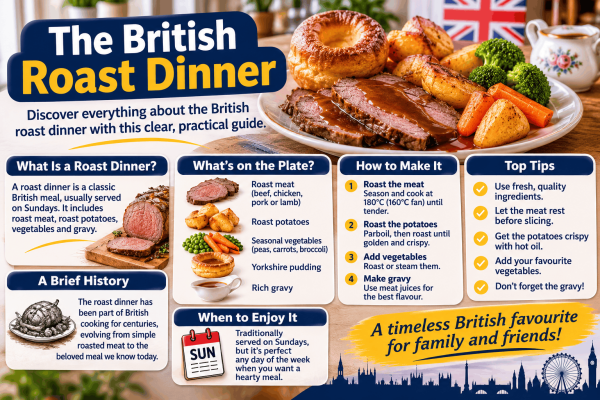
Yorkshire pudding is one of the most recognisable parts of a British roast dinner. It is a light, crisp batter pudding, baked in hot fat until it rises and turns golden brown. It is traditionally served with roast beef, but it is also eaten with other roasts and sometimes as a starter or a snack. This guide explains what Yorkshire pudding is, where it comes from, how to make it at home with a simple recipe, and the common mistakes that stop it from rising properly. It is written for anyone who wants a clear, practical overview rather than a chef’s masterclass.
Overview
Yorkshire pudding is a batter pudding made from flour, eggs, milk, and salt, cooked in hot fat. The batter is poured into a preheated tin with a little oil or dripping, and it is baked in a hot oven until it puffs up and turns crisp at the edges.
The dish is strongly associated with the county of Yorkshire, and it takes its name from there. It has been a part of British cooking for centuries, and it was traditionally cooked underneath a joint of meat so that it caught the dripping as the meat roasted. That method is less common today, but the basic idea is the same: hot fat and a hot oven are what make the pudding rise.
Yorkshire pudding is usually served as an accompaniment to a roast dinner, particularly roast beef. It can be made in one large tin or in individual portions, and it is often served with gravy. Some families eat it as a starter with onion gravy, and some eat it as a snack with jam or syrup, though that is less common.
The key thing to understand is that Yorkshire pudding is not difficult to make, but it does require attention to a few details. The oven must be hot, the fat must be smoking, and the batter should be rested before it is cooked. Getting these details right is the difference between a flat, pale pudding and a crisp, well-risen one.
What you need to know
The core of making Yorkshire pudding can be broken down into a few points that matter most.
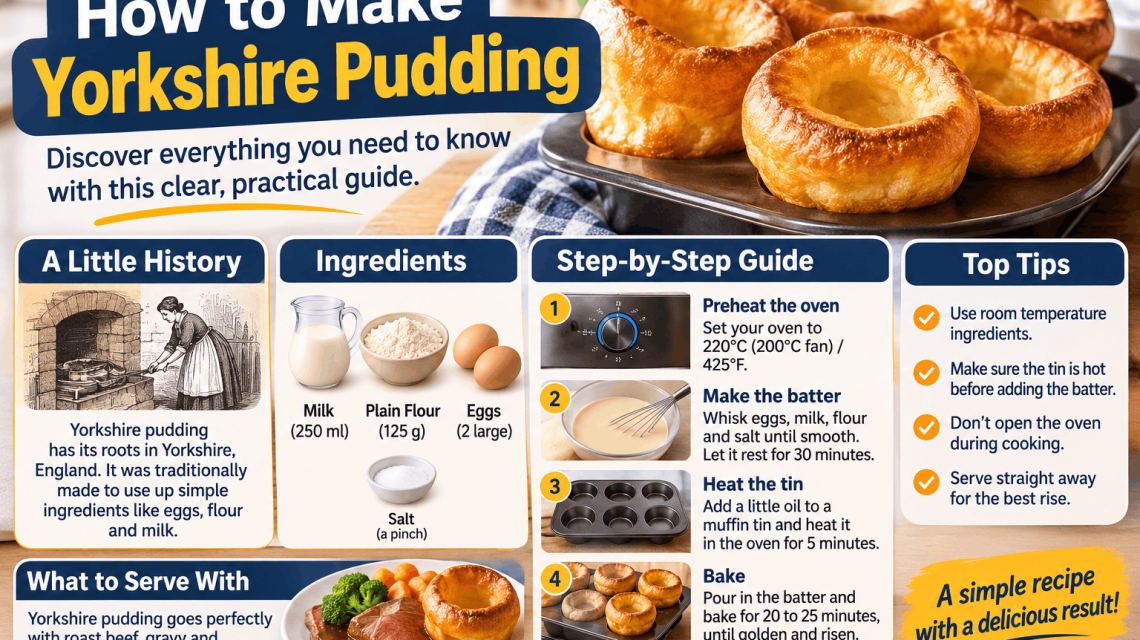
The first key point is the batter. A basic Yorkshire pudding batter is made from plain flour, eggs, milk, and salt. The ratio is roughly equal volumes of flour, eggs, and milk, though recipes vary. Some people use a little water alongside the milk to make the batter lighter.
The second point is the fat. Traditionally, beef dripping is used, but vegetable oil or lard also work. The fat must be very hot before the batter is added. This is what creates the rise and the crisp edges.
The third point is the oven temperature. Yorkshire puddings need a hot oven, typically around 220°C (200°C fan) or gas mark 7. The tin and the fat should be preheated in the oven until the fat is smoking, and the batter should be added quickly and returned to the oven straight away.
The fourth point is resting the batter. Letting the batter rest for at least 30 minutes, or overnight in the fridge, helps the flour absorb the liquid and gives a better texture. It is not essential, but it does improve the result.
Step-by-step approach to making Yorkshire pudding
Making Yorkshire pudding at home is straightforward if you follow the steps in order.
Step 1: Make the batter. In a bowl, combine 100g plain flour and a pinch of salt. Make a well in the centre and add 2 eggs. Whisk gradually, adding about 200ml of milk and 50ml of water, until the batter is smooth and lump-free. The consistency should be like single cream.
Step 2: Rest the batter. Cover the bowl and leave the batter to rest for at least 30 minutes at room temperature, or overnight in the fridge. This step helps the flour absorb the liquid and improves the texture.
Step 3: Preheat the oven and the tin. Set the oven to 220°C (200°C fan) or gas mark 7. Put a little beef dripping, lard, or vegetable oil into each hole of a Yorkshire pudding tin, or into a single roasting tin. Place the tin in the oven and heat it until the fat is smoking hot, which usually takes about 10 minutes.
Step 4: Pour in the batter. Working quickly, remove the tin from the oven and pour the batter into the hot fat. Fill each hole about two-thirds full, or pour the whole batter into a single tin. Do not overfill, as the batter needs room to rise.
Step 5: Bake. Return the tin to the oven immediately and bake for 20 to 25 minutes. Do not open the oven door during the first 15 minutes, as a draft can cause the pudding to collapse. The pudding is ready when it is well risen, golden brown, and crisp at the edges.
Step 6: Serve. Remove from the oven and serve immediately with roast beef, gravy, and vegetables. Yorkshire puddings are best eaten fresh, as they lose their crispness as they cool.
Common mistakes to avoid
A few common mistakes can stop Yorkshire pudding from rising properly.
The fat is not hot enough. If the fat is not smoking hot when the batter goes in, the pudding will not rise. Preheat the tin and fat properly before adding the batter.
The oven is not hot enough. Yorkshire puddings need a hot oven. If the oven is too cool, the pudding will be pale and flat rather than crisp and risen.
Opening the oven door too early. A draft of cold air can cause the pudding to collapse. Keep the oven door closed for at least the first 15 minutes of baking.
Overfilling the tin. If you pour too much batter into each hole, the pudding will not have room to rise and may spill over. Fill each hole about two-thirds full.
Using cold batter. Batter straight from the fridge can cool the fat and reduce the rise. Let the batter come to room temperature before using it, or rest it at room temperature rather than in the fridge.
UK-specific tips
For UK readers, there are a few specific angles worth noting about Yorkshire pudding.
The first is the regional identity. Yorkshire pudding is strongly associated with Yorkshire, and the county has a strong tradition of making it well. Many families have their own recipes and their own methods, and the dish is a source of local pride.
The second is the tradition of serving it as a starter. In some parts of the UK, particularly in Yorkshire, Yorkshire pudding is served as a starter with onion gravy before the main roast. This is a traditional practice and is worth trying if you have not had it before.
The third is the fat used. Beef dripping is the traditional choice and gives the best flavour and colour. Vegetable oil or lard are common alternatives, and some people use goose fat for a richer result. The fat should be very hot before the batter is added.
The fourth is the tin. Traditional Yorkshire pudding tins have four or six deep holes, which gives the puddings a good shape and helps them rise. If you do not have a Yorkshire pudding tin, a muffin tin or a roasting tin can work, though the shape and size of the puddings will vary.
Common questions
Why did my Yorkshire pudding not rise? The most common reasons are that the fat was not hot enough, the oven was not hot enough, the oven door was opened too early, or the batter was too cold. Check each of these details and try again.
Can I make Yorkshire pudding without eggs? Eggs are important for structure and rise, but there are egg-free recipes that use alternatives. The result will be different, but it is possible to make a version without eggs.
Can I make Yorkshire pudding batter in advance? Yes. The batter can be made the night before and left in the fridge. Let it come to room temperature before using it, as cold batter can reduce the rise.
What is the best fat for Yorkshire pudding? Beef dripping is the traditional choice and gives the best flavour and colour. Vegetable oil, lard, or goose fat are common alternatives.
Can I freeze Yorkshire puddings? Yes. Cooked Yorkshire puddings can be frozen and reheated in a hot oven. They will not be quite as crisp as fresh ones, but they are convenient for making ahead.
Frequently Asked Questions
What is Yorkshire pudding?
Yorkshire pudding is a batter pudding made from flour, eggs, milk, and salt, cooked in hot fat. It is a traditional part of a British roast dinner and is strongly associated with Yorkshire.
Why is it called Yorkshire pudding?
It takes its name from the county of Yorkshire, where it has been a traditional part of the local diet for centuries.
How do I make Yorkshire pudding rise?
The key is hot fat and a hot oven. Preheat the tin and fat until the fat is smoking, pour in the batter quickly, and bake in a hot oven without opening the door for the first 15 minutes.
What is the best fat for Yorkshire pudding?
Beef dripping is the traditional choice. Vegetable oil, lard, and goose fat are common alternatives.
Can I make Yorkshire pudding in advance?
The batter can be made in advance and rested in the fridge. Cooked Yorkshire puddings can be frozen and reheated. They are best eaten fresh, but making them ahead is convenient.
Why did my Yorkshire pudding collapse?
The most likely cause is opening the oven door too early, which lets in cold air. Keep the door closed for at least the first 15 minutes of baking.