Afternoon tea is one of the most recognisable British traditions. It is a light meal of sandwiches, scones, cakes, and tea, usually served in the late afternoon. It is not the same as “high tea”, and it is not an everyday habit for most people. This guide explains what afternoon tea actually is, where the tradition comes from, what to expect if you book one, and how to put together a simple version at home. It is written for anyone who wants a clear, practical overview rather than a history lecture.
Overview
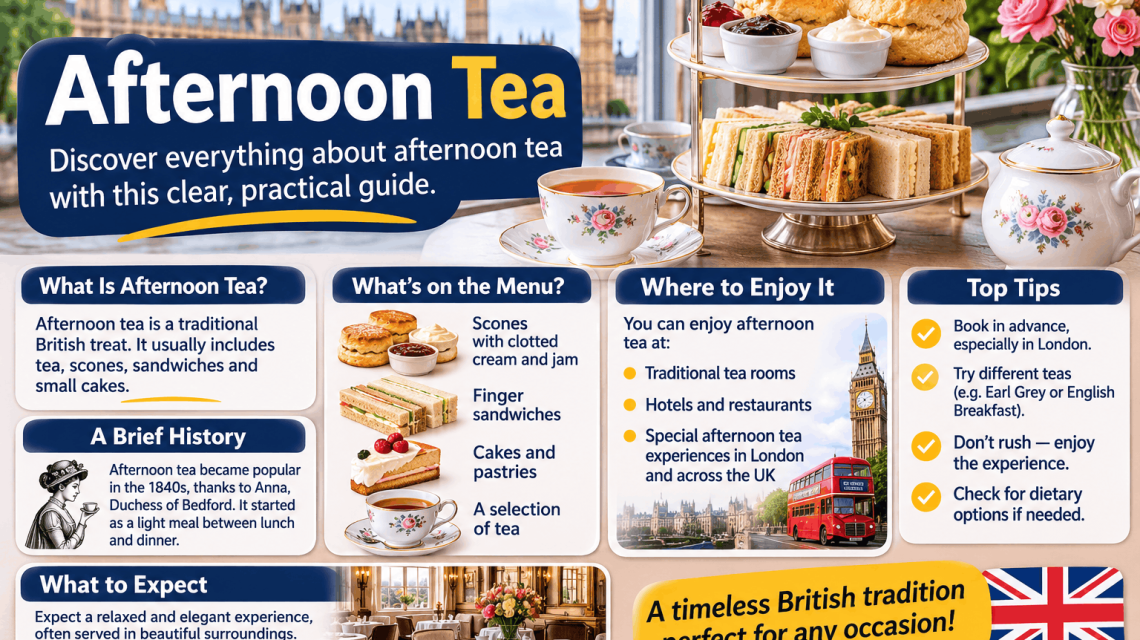
Afternoon tea is a British tradition that usually consists of a pot of tea, a selection of finger sandwiches, scones with clotted cream and jam, and a choice of cakes or pastries. It is typically served between 3pm and 5pm, though many venues now offer it throughout the afternoon.
The tradition is often traced to the early nineteenth century, when Anna, the seventh Duchess of Bedford, is said to have started taking a light meal in the afternoon to bridge the gap between lunch and a late dinner. The habit spread among the upper classes and eventually became a social occasion.
It is important to understand that afternoon tea is not the same as high tea. High tea was a working-class meal, usually eaten in the early evening after a day’s work, and it included hot dishes as well as tea. Afternoon tea was a lighter, more refined occasion. The two are often confused, particularly by visitors to the UK.
Afternoon tea is not an everyday meal for most people in Britain. It is usually enjoyed as a treat, on special occasions, in hotels, tea rooms, or as a gift experience. Many people in the UK have never had a full afternoon tea, and that is perfectly normal.
What you need to know
The core of afternoon tea can be broken down into a few points that matter most for anyone planning to try one or make one at home.
The first key point is the structure. A traditional afternoon tea has three parts: savoury sandwiches, scones, and sweet cakes or pastries. These are served in that order, with tea throughout. The sandwiches are usually finger-sized and made with soft bread, and the scones are served with clotted cream and jam.
The second point is the tea. A pot of tea is the centrepiece of the meal. Traditional choices include English Breakfast, Earl Grey, or Assam, though many venues now offer a wider selection. The tea is usually served with milk, and sometimes with sugar or lemon.
The third point is the setting. Afternoon tea is often served in hotels, tea rooms, and cafés, and some venues offer a more formal experience with a tiered stand. At home, it can be as simple as a pot of tea, a plate of sandwiches, and a few scones.
The fourth point is the distinction from high tea. Afternoon tea is a light, refined meal. High tea was a working-class meal with hot food, eaten later in the day. The terms are not interchangeable, and it is worth knowing the difference if you are booking or describing the meal.
Step-by-step approach to afternoon tea at home
Making afternoon tea at home is straightforward if you plan ahead. The aim is to have everything ready at the same time and to keep it simple.
Step 1: Choose the tea. Pick a tea that suits the occasion. English Breakfast is a safe choice, but Earl Grey or a fruit tea can work well. Brew it in a teapot and have milk and sugar ready.
Step 2: Make the sandwiches. Use soft bread and cut the crusts off. Fillings can be simple: cucumber and cream cheese, smoked salmon and cream cheese, egg mayonnaise, or ham and mustard. Cut them into finger-sized pieces.
Step 3: Prepare the scones. You can make scones from scratch or buy them. Warm them slightly before serving. Have clotted cream and jam ready, and let guests help themselves.
Step 4: Choose the cakes. A small selection of cakes or pastries is enough. A Victoria sponge, a fruit tart, or a few small cakes work well. Do not overdo it, as the meal is meant to be light.
Step 5: Set the table. Use a teapot, cups and saucers if you have them, and a tiered stand or a few plates. A cloth and a few flowers make it feel special without much effort.
Step 6: Serve in order. Start with the sandwiches, then the scones, then the cakes. Keep the tea topped up throughout.
UK-specific tips
For UK readers, there are a few specific angles worth noting about afternoon tea.
The first is the range of venues. Afternoon tea is served in hotels, tea rooms, department stores, and cafés across the UK. Many venues offer a set menu with a fixed price, and some require booking in advance. It is worth checking the menu and the price before you book.
The second is the regional variation. Some regions have their own traditions, such as the Cornish and Devonshire cream teas, which are simpler versions of afternoon tea with scones, cream, and jam. The Cornish tradition puts jam first and then cream, while the Devonshire tradition puts cream first and then jam. Both are worth trying, and the debate is part of the fun.
The third is the cost. Afternoon tea in a hotel or a specialist tea room can be expensive, often between £20 and £50 per person or more. It is a treat rather than an everyday meal. A simpler version at home is much cheaper.
The fourth is the dress code. Some venues have a smart casual dress code, particularly for a formal afternoon tea. It is worth checking when you book.
Common questions
What is the difference between afternoon tea and high tea? Afternoon tea is a light meal of sandwiches, scones, and cakes, usually served between 3pm and 5pm. High tea was a working-class meal with hot food, eaten later in the day. The terms are not interchangeable.
Do I need to book afternoon tea in advance? Many venues require booking, particularly for a formal afternoon tea in a hotel or tea room. It is worth checking and reserving a table before you go.
What should I wear to afternoon tea? Many venues are relaxed, but some have a smart casual dress code. It is worth checking when you book. Smart casual is a safe choice for most venues.
What is the correct order for eating afternoon tea? The traditional order is sandwiches first, then scones, then cakes. The tea is served throughout the meal.
Can I make afternoon tea at home? Yes. A simple version with a pot of tea, a few sandwiches, scones, and cakes is easy to put together at home. It does not need to be elaborate to be enjoyable.
What is a cream tea? A cream tea is a simpler version of afternoon tea, usually consisting of scones, clotted cream, jam, and tea. It is common in Devon and Cornwall, and it is a lighter alternative to a full afternoon tea.
Frequently Asked Questions
What is afternoon tea?
Afternoon tea is a British tradition consisting of a pot of tea, finger sandwiches, scones with clotted cream and jam, and a selection of cakes or pastries. It is usually served between 3pm and 5pm.
What is the difference between afternoon tea and high tea?
Afternoon tea is a light meal, usually served in the late afternoon. High tea was a working-class meal with hot food, eaten later in the day. The terms are not interchangeable.
Do I need to book afternoon tea in advance?
Many venues require booking, particularly for a formal afternoon tea in a hotel or tea room. It is worth checking and reserving a table before you go.
What should I wear to afternoon tea?
Many venues are relaxed, but some have a smart casual dress code. It is worth checking when you book. Smart casual is a safe choice for most venues.
What is the correct order for eating afternoon tea?
The traditional order is sandwiches first, then scones, then cakes. The tea is served throughout the meal.
Can I make afternoon tea at home?
Yes. A simple version with a pot of tea, a few sandwiches, scones, and cakes is easy to put together at home. It does not need to be elaborate to be enjoyable.