Fish and chips is one of the most recognisable meals in Britain. It is a simple combination of battered fish and deep-fried chips, served with salt and vinegar, and it has been a staple of the British high street for more than a century. But where did it come from, and how did it become the meal that so many people associate with the UK? This guide sets out the history of fish and chips in plain terms, explains why it matters in British food culture, and covers the practical details that are worth knowing, whether you are interested in the story behind the meal or simply want to understand what makes a good portion.
Overview
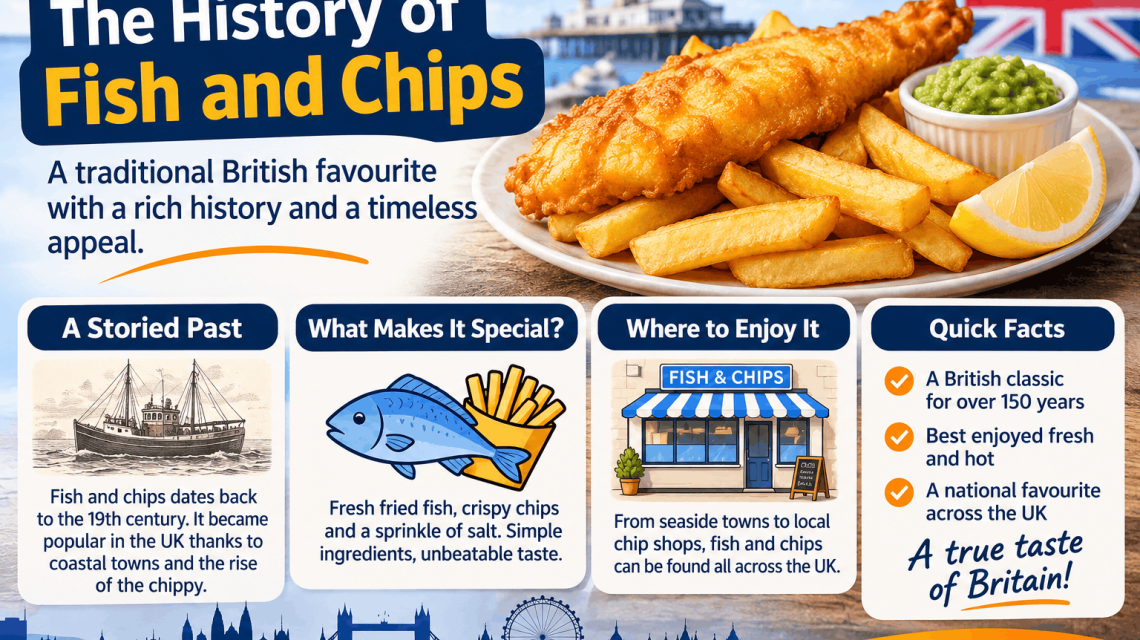
Fish and chips as we know it today is a meal with two separate histories that came together in the nineteenth century. Fried fish was a common food in London’s East End, particularly among Jewish immigrants from Portugal and Spain, who brought the tradition of frying fish in oil. Chips, meanwhile, have a separate origin story, with fried potatoes appearing in working-class diets in the North of England and in other parts of the country.
The exact moment when the two were first served together is debated. There is a widely repeated claim that the first fish and chip shop opened in London in the 1860s, and another that the first shop opened in Mossley, near Manchester, in the same period. The truth is that the meal emerged gradually in different places, and the exact origin is less important than the fact that it became popular quickly.
The meal became a staple of working-class diets in the late nineteenth and early twentieth centuries. Fish was relatively cheap and plentiful, particularly in coastal towns and in cities with good rail links to the coast. Potatoes were cheap and filling. Together, they made a meal that was affordable, hot, and satisfying.
During the Second World War, fish and chips was one of the few foods that was not rationed. This made it an important part of the national diet at a time when many other foods were in short supply. It remains a symbol of British food culture, and it is still served in fish and chip shops, pubs, and restaurants across the UK.
What you need to know
The history of fish and chips can be broken down into a few key points that matter most for anyone interested in the subject.
The first key point is that the meal has two separate origins. Fried fish came to Britain through immigrant communities, particularly Jewish communities in London. Chips have a separate history in the working-class diets of the North of England and other regions. The two were combined in the nineteenth century, and the exact location of the first combined shop is disputed.
The second point is that the meal became popular because it was affordable and filling. Fish and chips was a cheap source of protein and calories at a time when many working-class families had limited budgets. It was also a hot meal that could be bought ready-made, which made it convenient for people working long hours.
The third point is that fish and chips was not rationed during the Second World War. This made it an important part of the national diet at a time when many other foods were in short supply. It became a symbol of British resilience and continues to be associated with the war years.
The fourth point is that the meal has regional variations. In the North of England, chips are often cooked in beef dripping, while in the South they are more commonly cooked in vegetable oil. The type of fish used also varies by region, with cod and haddock being the most common choices.
A brief history of fish and chips
The history of fish and chips can be traced through several distinct phases.
Fried fish in London. Fried fish was sold in London’s East End in the early nineteenth century, particularly among Jewish immigrants from Portugal and Spain. These communities brought the tradition of frying fish in oil, and the dish became popular in the area.
The arrival of chips. Fried potatoes appeared in working-class diets in the North of England and other regions in the nineteenth century. They were cheap, filling, and easy to cook in large quantities.
The first combined shops. The exact origin of the first fish and chip shop is disputed. One claim is that a shop opened in London in the 1860s, while another is that a shop opened in Mossley, near Manchester, in the same period. Both stories are widely repeated, and the truth is likely that the meal emerged in several places at once.
The meal becomes a staple. By the late nineteenth century, fish and chips had become a staple of working-class diets across the UK. It was cheap, filling, and widely available, and it became particularly associated with industrial areas and coastal towns.
The war years. During the Second World War, fish and chips was one of the few foods that was not rationed. This made it an important part of the national diet and cemented its place in British food culture.
The modern era. Fish and chips remains a popular meal in the UK. It is served in traditional fish and chip shops, pubs, and restaurants, and it is still associated with the seaside, Friday nights, and working-class food culture.
UK-specific tips
For UK readers, there are a few specific angles worth noting about fish and chips history and culture.
The first is the regional variation in cooking. In the North of England, chips are often cooked in beef dripping, which gives them a distinct flavour and texture. In the South, vegetable oil is more common. The type of fish used also varies, with cod being the most common choice in the South and haddock being more common in the North.
The second is the tradition of eating fish and chips on a Friday. This is linked to the Catholic tradition of eating fish on Fridays, and it remains a common practice in many parts of the UK. Many fish and chip shops are busiest on Friday evenings.
The third is the seaside connection. Fish and chips is strongly associated with British seaside towns, and many people have memories of eating fish and chips on the beach or the promenade. This connection is part of the meal’s cultural identity.
The fourth is the way the meal is served. Traditional fish and chip shops serve the meal wrapped in paper, often with salt and vinegar, and sometimes with a slice of lemon or a pot of tartar sauce. The wrapping and the condiments are part of the experience.
Common questions
When was fish and chips invented? The exact origin is disputed, but the meal emerged in the nineteenth century. Fried fish was sold in London’s East End in the early nineteenth century, and chips appeared in working-class diets around the same time. The first combined shops are claimed to have opened in the 1860s, though the exact location is debated.
Why is fish and chips associated with the UK? Fish and chips became a staple of working-class diets in the late nineteenth and early twentieth centuries, and it was one of the few foods not rationed during the Second World War. It remains a symbol of British food culture.
What type of fish is used in fish and chips? Cod and haddock are the most common choices, though other fish such as plaice, skate, and hake are also used. The choice varies by region and by shop.
Why are fish and chips eaten on Fridays? The tradition is linked to the Catholic practice of eating fish on Fridays. It remains a common habit in many parts of the UK, and fish and chip shops are often busiest on Friday evenings.
Are fish and chips healthy? Fish and chips is a fried meal and is generally high in fat and calories. It is not usually recommended as an everyday meal, but as an occasional treat it is fine for most people. If you have specific dietary concerns, it is worth speaking to a qualified adviser rather than relying on general advice.
Frequently Asked Questions
When was fish and chips invented?
The exact origin is disputed. Fried fish was sold in London’s East End in the early nineteenth century, and chips appeared in working-class diets around the same time. The first combined shops are claimed to have opened in the 1860s, though the exact location is debated.
Why is fish and chips associated with the UK?
Fish and chips became a staple of working-class diets in the late nineteenth and early twentieth centuries, and it was one of the few foods not rationed during the Second World War. It remains a symbol of British food culture.
What type of fish is used in fish and chips?
Cod and haddock are the most common choices, though other fish such as plaice, skate, and hake are also used. The choice varies by region and by shop.
Why are fish and chips eaten on Fridays?
The tradition is linked to the Catholic practice of eating fish on Fridays. It remains a common habit in many parts of the UK, and fish and chip shops are often busiest on Friday evenings.
Are fish and chips healthy?
Fish and chips is a fried meal and is generally high in fat and calories. It is not usually recommended as an everyday meal, but as an occasional treat it is fine for most people. If you have specific dietary concerns, it is worth speaking to a qualified adviser rather than relying on general advice.
Where can I find traditional fish and chips in the UK?
Traditional fish and chip shops are found across the UK, particularly in coastal towns and in areas with a strong working-class food culture. Many shops still serve the meal wrapped in paper with salt and vinegar, and some use beef dripping for the chips, particularly in the North of England.