Chips and fries are both made from potatoes, both are fried, and both are served hot. So why do they look, taste, and feel so different? In the UK, the word “chips” means something specific, and it is not the same as the thin, crisp fries you get from a fast-food chain. This guide explains the difference between chips and fries, where the two terms come from, how they are made differently, and why the distinction matters in British food culture. It is written for anyone who has ever wondered why a portion of chips from a fish and chip shop tastes nothing like a portion of fries from a burger chain.
Overview
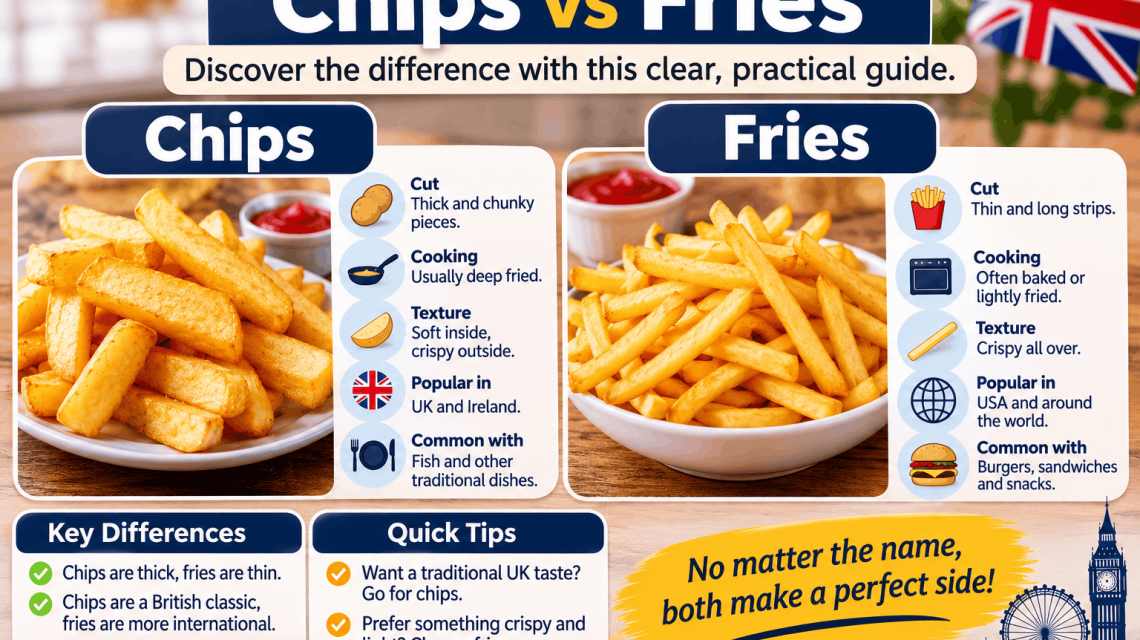
The difference between chips and fries comes down to three things: thickness, cooking method, and texture. Chips in the UK are thick-cut, usually made from large potatoes cut into chunky batons, and they are often cooked twice, first at a lower temperature and then at a higher one. This gives them a crisp outside and a fluffy inside. Fries, by contrast, are thin-cut, usually made from potatoes cut into matchsticks, and they are often cooked once at a high temperature, which makes them crisp all the way through.
The terms are not interchangeable in the UK. “Chips” is the British word for thick-cut fried potatoes, and it is the word used in fish and chip shops, in pubs, and at home. “Fries” is the American word, and in the UK it usually refers to the thin, fast-food style potatoes served in burger chains and some restaurants. If you ask for “chips” in a British pub, you will get thick-cut potatoes. If you ask for “fries”, you will usually get the thin version.
The history of the two is also different. Chips have been part of British food culture for over a century, and they are strongly associated with fish and chip shops and working-class food. Fries are more recent in the UK, and they became popular with the rise of American fast-food chains. The two are now both common in the UK, but they occupy different places in the food culture.
It is worth saying at the outset that the distinction is not just about size. The cooking method, the type of potato, and the texture all contribute to the difference. Understanding these details helps explain why chips and fries taste so different, even though they are made from the same basic ingredient.
What you need to know
The core of the difference between chips and fries can be broken down into a few points that matter most.
The first key point is the cut. Chips are thick-cut, usually about 1cm to 1.5cm thick, and they are cut from large, floury potatoes. Fries are thin-cut, usually about 0.5cm or less, and they are often cut from waxy potatoes. The cut affects how the potato cooks and how much surface area is exposed to the oil.
The second point is the cooking method. Chips are often cooked twice: first at a lower temperature (around 140°C to 160°C) to cook the potato through, then at a higher temperature (around 180°C to 190°C) to crisp the outside. Fries are often cooked once at a high temperature, which makes them crisp quickly but can leave the inside less fluffy.
The third point is the fat used. Traditional British chips are often cooked in beef dripping, which gives them a distinctive flavour and colour. Fries are usually cooked in vegetable oil, which gives a lighter, more neutral taste.
The fourth point is the texture. Chips are crisp on the outside and fluffy on the inside, with a thicker, more substantial bite. Fries are crisp all the way through, with a thinner, more delicate texture.
The fifth point is the cultural association. Chips are associated with fish and chip shops, pubs, and British home cooking. Fries are associated with fast food, American chains, and international menus.
Step-by-step approach to making chips and fries at home
Making chips and fries at home is straightforward if you follow the steps. The two methods are different, so it is worth treating them separately.
To make chips:
Step 1: Choose the potatoes. Use a floury potato such as Maris Piper or King Edward. Peel and cut into thick batons, about 1cm to 1.5cm thick.
Step 2: Rinse and dry. Rinse the chips in cold water to remove excess starch, then dry them thoroughly with a tea towel. Wet chips will not crisp properly.
Step 3: First fry. Heat oil or beef dripping to around 140°C to 160°C. Fry the chips for about 6 to 8 minutes, until they are soft but not browned. Remove and drain on kitchen paper.
Step 4: Second fry. Increase the oil temperature to around 180°C to 190°C. Fry the chips again for 2 to 3 minutes, until they are golden and crisp. Remove and drain, then season with salt.
To make fries:
Step 1: Choose the potatoes. Use a waxy potato such as Russet or Maris Peer. Peel and cut into thin matchsticks, about 0.5cm thick.
Step 2: Rinse and dry. Rinse the fries in cold water to remove excess starch, then dry them thoroughly.
Step 3: Fry. Heat vegetable oil to around 180°C. Fry the fries for 2 to 3 minutes, until they are golden and crisp. Remove and drain, then season with salt.
UK-specific tips
For UK readers, there are a few specific angles worth noting about chips and fries.
The first is the terminology. In the UK, “chips” always means thick-cut potatoes, and “fries” means the thin version. If you are ordering in a pub or a fish and chip shop, ask for chips. If you are in a fast-food chain, you will usually be given fries.
The second is the regional variation. In the North of England, chips are often cooked in beef dripping, which gives them a darker colour and a richer flavour. In the South, vegetable oil is more common. Both are traditional, and the choice is a matter of local preference.
The third is the fish and chip shop tradition. Chips are the essential accompaniment to fish and chips, and they are usually served with salt and vinegar. The chips in a traditional fish and chip shop are thick-cut and often cooked in beef dripping, which is part of what makes them taste different from fries.
The fourth is the rise of fries in the UK. Fries became popular in the UK with the rise of American fast-food chains in the 1970s and 1980s. They are now common in restaurants, burger chains, and some pubs, but they have not replaced traditional chips in British food culture.
Frequently Asked Questions
What is the difference between chips and fries?
In the UK, chips are thick-cut potatoes, usually cooked twice and often in beef dripping. Fries are thin-cut potatoes, usually cooked once in vegetable oil. They differ in texture, flavour, and cultural association.
Why are British chips thicker than fries?
British chips are traditionally thick-cut because that is the style associated with fish and chip shops and home cooking. The thickness gives them a fluffy inside and a crisp outside.
What is the difference between chips and French fries?
French fries are the thin, crisp potatoes served in fast-food chains. They are what the British call “fries”. British chips are thicker and are usually cooked differently.
Are chips healthier than fries?
Both are fried potatoes and are generally high in fat and calories. The difference in health terms is not significant. Both should be eaten as an occasional treat rather than an everyday food.
Can I make chips in an air fryer?
Yes. Air fryers can make a reasonable version of chips, though the texture will be slightly different from deep-fried chips. Cut the potatoes into thick batons, toss in a little oil, and cook at around 200°C for 20 to 25 minutes, shaking occasionally.
What potatoes are best for chips?
Floury potatoes such as Maris Piper, King Edward, and Desiree are best for chips. They give a fluffy inside and a crisp outside. Waxy potatoes are better for fries.