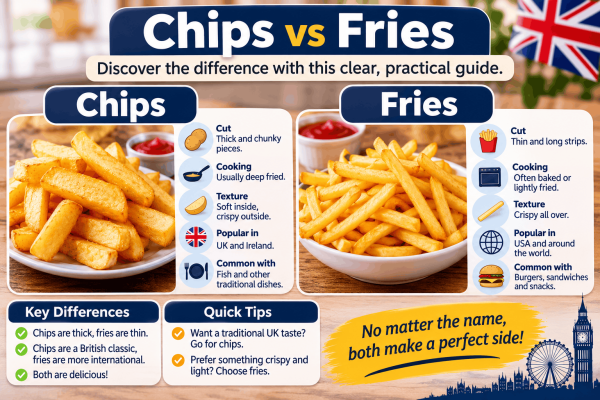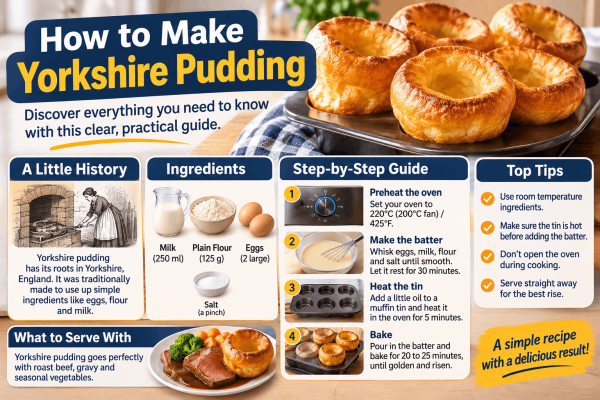
The British roast dinner is one of the most recognisable meals in the country. It is a traditional Sunday meal of roasted meat, potatoes, vegetables, and gravy, and it is often described as the centrepiece of British home cooking. This guide explains what a British roast dinner actually consists of, where the tradition comes from, how to put one together at home, and the common mistakes that can spoil it. It is written for anyone who wants a clear, practical overview rather than a chef’s manual.
Overview
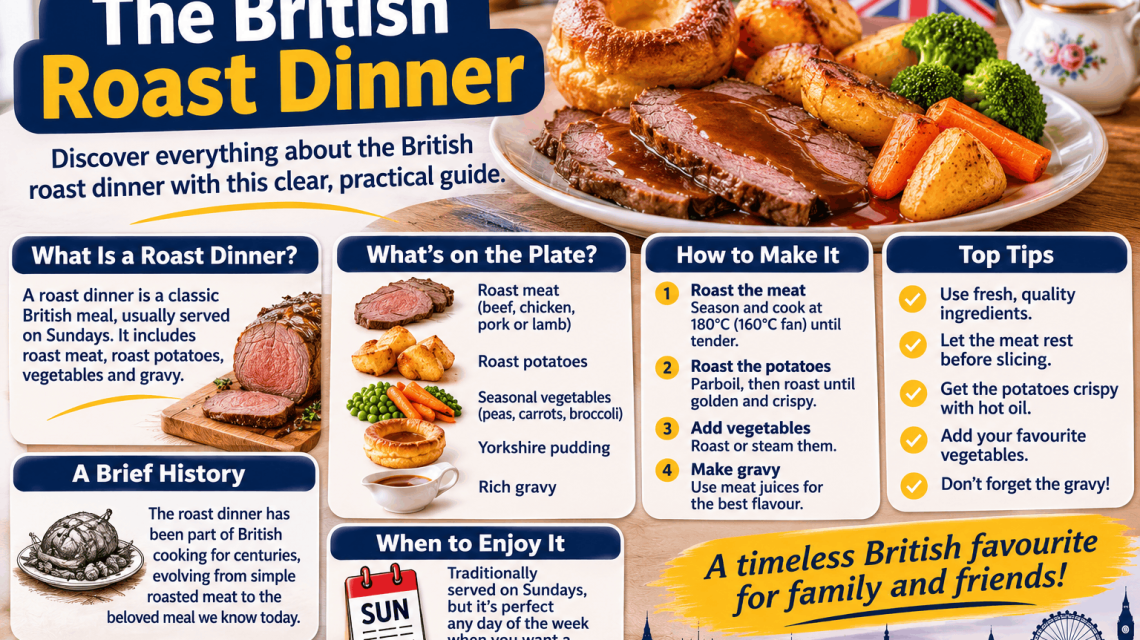
A British roast dinner, often called a Sunday roast, is a meal built around a joint of roasted meat. The most common choices are roast beef, roast chicken, roast lamb, and roast pork. These are served with roast potatoes, vegetables, and gravy, and often with Yorkshire pudding, stuffing, or a sauce such as apple sauce or mint sauce.
The meal is strongly associated with Sunday, and it has been a traditional part of British life for centuries. It is also served in pubs and carveries across the UK, particularly on Sundays, and it remains a popular meal for family gatherings and special occasions.
The exact composition of a roast dinner varies by region and by household. Some families serve Yorkshire pudding only with beef, while others serve it with every roast. Some serve stuffing with chicken or pork, and some serve bread sauce with chicken. The core of the meal is the roasted meat, potatoes, vegetables, and gravy, and the rest is flexible.
It is worth saying at the outset that a roast dinner is not a quick meal. It takes time and attention, particularly if you are cooking a large joint of meat. But it is not difficult, and the result is a satisfying, traditional meal that is worth the effort.
What you need to know
The core of a British roast dinner can be broken down into a few points that matter most.
The first key point is the meat. The choice of meat sets the tone for the meal. Roast beef is often considered the classic choice, but chicken, lamb, and pork are also common. The meat should be roasted slowly and rested before carving, which helps it stay juicy.
The second point is the potatoes. Roast potatoes are essential. They should be crisp on the outside and fluffy on the inside, which is achieved by parboiling them first, then shaking them in the pan to roughen the edges, and roasting them in hot fat.
The third point is the vegetables. Common vegetables include carrots, peas, broccoli, and cabbage. These are usually boiled or steamed, and some families serve cauliflower cheese as an additional side.
The fourth point is the gravy. Gravy is made from the meat juices, stock, and flour or cornflour. It is an important part of the meal and is usually served poured over the meat and potatoes.
The fifth point is the sides. Yorkshire pudding, stuffing, and sauces are common additions. These vary by household and by region, and they are part of what makes the meal feel traditional.
Step-by-step approach to making a British roast dinner
Making a roast dinner at home is manageable if you plan the order of cooking. The aim is to have everything hot and ready at the same time.
Step 1: Choose the meat. Decide on the joint you want to cook. Beef, chicken, lamb, and pork all work well. Take the meat out of the fridge about 30 minutes before cooking to let it come to room temperature.
Step 2: Preheat the oven. Set the oven to the temperature recommended for your meat, usually around 180°C to 200°C (160°C to 180°C fan) depending on the cut.
Step 3: Prepare the potatoes. Peel and cut the potatoes into even-sized pieces. Parboil them for about 8 to 10 minutes, then drain and shake them in the pan to roughen the edges. Heat oil or fat in a roasting tin and add the potatoes, turning them to coat.
Step 4: Roast the meat. Put the meat in the oven and roast it according to its weight and type. Baste it occasionally with the juices. Use a meat thermometer if you want to be sure it is cooked to your liking.
Step 5: Cook the vegetables. Prepare the vegetables and cook them towards the end of the meat’s cooking time so they are fresh and hot when served.
Step 6: Make the gravy. Once the meat is cooked, remove it from the pan and rest it on a board. Use the juices in the pan to make the gravy, adding stock and thickening with flour or cornflour.
Step 7: Make the Yorkshire puddings and stuffing. If you are serving Yorkshire puddings, make the batter in advance and cook them in a hot oven while the meat rests. Stuffing can be cooked alongside the meat or in a separate dish.
Step 8: Serve. Carve the meat, arrange the potatoes, vegetables, and sides on plates, and pour over the gravy. Serve immediately.
Common mistakes to avoid
A few common mistakes can spoil a roast dinner.
Not resting the meat. Resting the meat for 10 to 20 minutes after roasting allows the juices to settle and makes the meat more tender. If you carve it immediately, the juices run out and the meat can be dry.
Crowding the roasting tin. If the potatoes are too close together, they steam rather than roast and will not be crisp. Use a large enough tin and leave space between them.
Undercooking the potatoes. Parboiling the potatoes first is important. If you skip this step, the potatoes will not be fluffy inside and crisp outside.
Making the gravy too thin. Gravy should coat the back of a spoon. If it is too thin, thicken it with a little flour or cornflour and simmer it for a few minutes.
Not seasoning the meat. Season the meat with salt and pepper before roasting. This improves the flavour and helps the meat brown.
UK-specific tips
For UK readers, there are a few specific angles worth noting about the British roast dinner.
The first is the regional variation. Yorkshire pudding is strongly associated with Yorkshire, but it is served across the UK, particularly with roast beef. In some regions, stuffing is served with chicken or pork, and in others it is served with all roasts. These variations are part of the regional food culture.
The second is the pub carvery. Many pubs across the UK offer a Sunday carvery, where you can choose from a selection of roasted meats and help yourself to vegetables, potatoes, and gravy. This is a popular and affordable way to enjoy a roast dinner without cooking at home.
The third is the tradition of Sunday lunch. The roast dinner is traditionally eaten at midday on Sunday, though many families now eat it in the early afternoon or evening. It remains a social meal, often shared with family.
The fourth is the products available. UK supermarkets stock everything you need for a roast dinner, from joints of meat to ready-made Yorkshire puddings and gravy granules. These can save time, though making from scratch gives a better result.
Frequently Asked Questions
What is a British roast dinner?
A British roast dinner is a traditional meal of roasted meat, potatoes, vegetables, and gravy, often served with Yorkshire pudding, stuffing, and sauces. It is strongly associated with Sunday and is a staple of British home cooking.
What meat is best for a roast dinner?
Beef, chicken, lamb, and pork are all common choices. Beef is often considered the classic, but the best choice depends on your preference and the occasion.
Do I have to serve Yorkshire pudding?
No. Yorkshire pudding is traditional with roast beef, but many families serve it with other roasts or not at all. It is a flexible part of the meal.
How long should I rest the meat?
Rest the meat for 10 to 20 minutes after roasting. This allows the juices to settle and makes the meat more tender.
Can I make a roast dinner in advance?
Some parts can be prepared in advance, such as peeling the vegetables and making the Yorkshire pudding batter. The meat is best cooked fresh, but it can be reheated.
What is a carvery?
A carvery is a type of restaurant or pub where you choose from a selection of roasted meats and help yourself to vegetables, potatoes, and gravy. It is a popular way to enjoy a roast dinner without cooking at home.