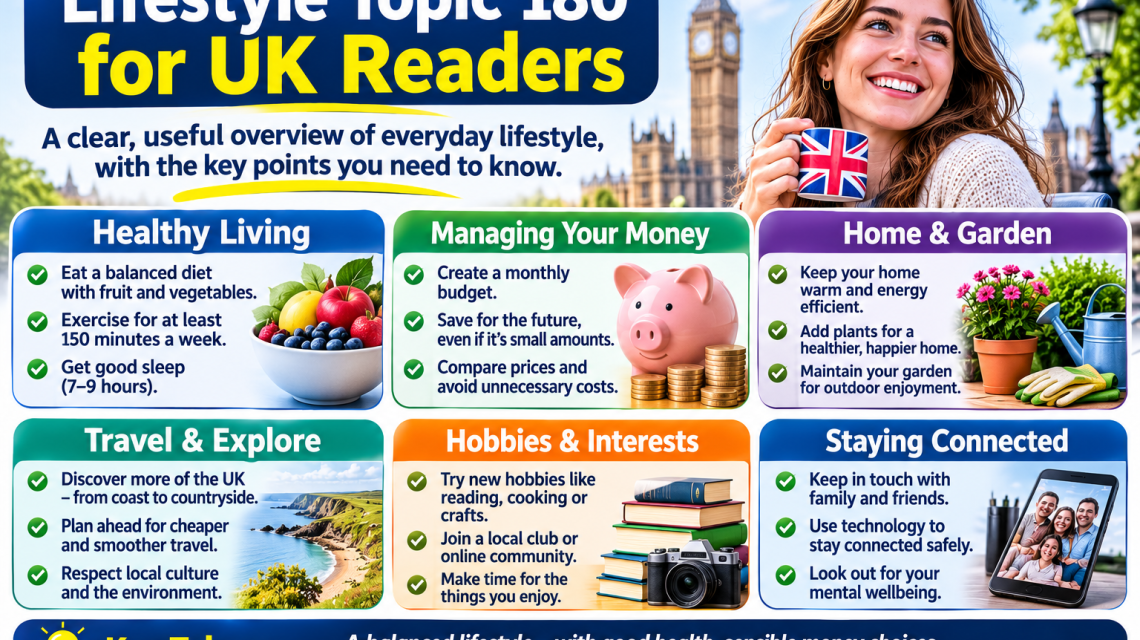
Lifestyle Topic 180 is one of those subjects that comes up in ordinary life without much warning, and it is easy to feel unsure about where to begin. This guide sets out the key points in plain English, explains why the topic matters for UK readers, and covers the practical considerations worth knowing before you make any decisions. It assumes no prior knowledge and is written for anyone who wants a straightforward overview rather than a lecture.
Overview
Lifestyle Topic 180 sits within the Lifestyle & Practical Advice category, which means it is a practical, everyday subject rather than a specialist one. It is the sort of thing you might need to deal with at home, in conversation with family or neighbours, or when making a small personal decision.
The first thing to understand is that the topic is broader than it first appears. What most people mean when they talk about it is a specific everyday situation, but the underlying principles apply in several contexts. Getting to grips with the basics makes the rest much easier to follow.
It is also worth saying at the outset that this is not a subject where you need expert knowledge to get a reasonable outcome. A clear understanding of the main points, a bit of care, and a sensible approach will cover most situations. Where specialist advice genuinely is needed, this guide flags it clearly rather than pretending otherwise.
Key points to know
The core of the topic can be broken down into a handful of points that matter most in ordinary use. These are the things that come up again and again, and understanding them will save time and awkwardness.
The first key point is about purpose. Knowing what the topic is for, and what it is not for, prevents a lot of wasted effort. Many common mistakes come from applying it in the wrong situation or expecting it to solve a problem it was never designed to solve.
The second point is about the range of options. There is rarely a single correct answer. In most everyday situations, there are several reasonable approaches, and the best one depends on your circumstances, your budget, and how much time you have. A measured approach usually beats rushing into the first option you find.
The third point is about change over time. Details in this area are not fixed. Prices, habits, and common practice can shift, so any specific figure or recommendation should be treated as a starting point rather than a permanent truth. Checking current information before acting is always sensible.
The fourth point is about the limits of self-help. For most everyday purposes, you can handle the topic yourself with a bit of thought. But there are situations where a professional, a family member, or a trusted friend is the right person to involve, and recognising those situations early is part of using the topic well.
Practical considerations
When it comes to actually using this information, a few practical considerations make a real difference. These are the things people tend to learn the hard way, and setting them out clearly should help you avoid the same pitfalls.
Start by being clear about what you are trying to achieve. A vague goal leads to vague results. Writing down the specific outcome you want, even in a sentence, sharpens your thinking and makes it easier to judge whether a particular approach is worth it.
Next, consider the cost, both in money and in time. Everyday matters often look simple until you start adding up the small expenses or the hours involved. A rough budget and a realistic time estimate, even if they are approximate, help you avoid surprises.
Then think about the people involved. Many lifestyle topics are not purely personal; they affect family, neighbours, or colleagues. A quick conversation before you commit to something can prevent misunderstandings later, and it is usually easier to have that conversation early than to fix a problem afterwards.
Finally, keep a simple record. This sounds dull, but it is one of the most useful habits in everyday life. Keeping a note of what you decided, when, and why makes it much easier to follow up, to explain your reasoning to someone else, and to learn from what worked and what did not.
UK context
For UK readers, there are a few specific angles worth noting. Everyday life in the UK has its own rhythms, rules, and habits, and the topic shows up in particular ways here.
The first is the role of local services. In many parts of the UK, the practical side of this topic involves dealing with councils, local authorities, or publicly funded bodies. These organisations vary in how they operate, and what is standard in one area may not be in another. Checking your local council’s website is usually the fastest way to find out what applies where you live.
The second is the seasonal pattern. British weather and the British calendar shape how and when this topic comes up. Some aspects are more relevant in winter, others in summer, and the timing can affect both cost and convenience. Planning around the seasons rather than against them tends to make things easier.
The third is the language. Everyday topics in the UK often come with their own vocabulary, and official documents can use terms that are not obvious to everyone. If a word or phrase is unclear, it is worth looking it up rather than guessing. Plain English guides, often available from Citizens Advice or gov.uk, are a useful starting point.
The fourth is the variation across the UK. England, Scotland, Wales, and Northern Ireland do not always have the same rules or the same practical arrangements. If you are reading advice online, check that it applies to where you live. A detail that is correct in England may not be correct in Scotland.
Further reading
If you want to go deeper into this topic, there are a few reliable places to start. These are practical, public sources rather than specialist publications, and they are written for a general audience.
The first is gov.uk, which covers a wide range of everyday topics in plain language and is kept up to date. It is not always the most detailed source, but it is a good place to check the basics and to find out which organisation is responsible for what.
The second is Citizens Advice, which offers free, independent advice on many everyday matters. Its website is clear and well organised, and it covers the kind of practical questions that come up in ordinary life.
The third is your local council. For anything that varies by area, the council website is the most reliable source. It may not be the most elegantly written, but it will tell you what actually applies where you live.
Finally, for topics that involve money, health, or legal matters, it is worth speaking to a qualified adviser rather than relying on general guides. This article is an overview, not a substitute for specialist advice, and where the stakes are higher, the right move is to ask someone who deals with the subject professionally.
Frequently Asked Questions
What is Lifestyle Topic 180?
Lifestyle Topic 180 is a practical, everyday subject covered in the Lifestyle & Practical Advice category. It is the kind of topic that comes up in ordinary life rather than a specialist field, and it can be understood without prior technical knowledge.
Why does Lifestyle Topic 180 matter?
It matters because it affects ordinary decisions and everyday situations. Understanding the basics helps you avoid common mistakes, saves time and money, and makes it easier to deal with the practical side of the topic when it comes up.
What should UK readers know about Lifestyle Topic 180?
UK readers should be aware that the practical details can vary by nation and by local authority. England, Scotland, Wales, and Northern Ireland do not always have the same rules, and local councils often set their own arrangements. Checking current, local information is always sensible.
Where can I find more information on Lifestyle Topic 180?
Gov.uk and Citizens Advice are good starting points for plain-language information. Your local council website is the most reliable source for anything that varies by area. For matters involving money, health, or legal issues, a qualified adviser is the right person to ask.